Tailor-Made Walking Holidays in the Alps

A week at the end of June. Seven of you. A couple who would rather come out by train than fly, arriving into Grenoble. A mother-in-law who is far happier with four hours on the hill than seven. No scheduled departure will tick every box. That is not, in itself, a reason to abandon the idea of going together.
A tailor-made holiday begins precisely there: with your group, your dates and what you are actually after. We put what we know of the Alps to work on your plan and settle on the massif, the route, the accommodation and the pace that fit together. What comes out of it may borrow from one of our existing holidays, or be drawn up from scratch.
It is a different arrangement from a scheduled departure, where you fit yourself around a date and an itinerary decided in advance and share the walking with other participants. Tailor-made works the other way round: it brings the mountains into your circumstances, whether that means a family of mixed ability, a group of friends, a birthday worth marking, or simply a week that suits nobody’s published calendar.
At Altimood, there are two of us, both qualified nature and mountain guides, based in the Champsaur-Valgaudemar between the Écrins and the Dévoluy. We lead a dozen or so open-group departures a year and build the remainder of our seasons to order, across the whole alpine arc from the Vercors to the Dolomites.
If you already have something in mind, however loosely, write to us at bonjouraltimood.com . And if you are still working out what is possible, this page sets out how we build a holiday from your constraints.
- Tailor-made, private hire and own group: what changes
- Four pieces of information shape the holiday
- A tailor-made walking holiday in the Alps, from France to Slovenia
- How far ahead to write to us
- The budget for a tailor-made holiday
- The projects that come up most often
- Describing your project
- Frequently asked questions
- Ideas before you write
Tailor-made, private hire and own group: what changes
Private hire is tailor-made in the strict sense: you book a guide for as long as you wish and put the programme together with them, from the meeting point to the daily timings to the route itself.
An own group rests on the same principle: the trip is designed to order, for a group you assemble yourself. The programme may borrow from one of our existing holidays or start from a blank sheet.
An open group, by contrast, is our published calendar: you join a departure whose programme, dates and framework are fixed in advance, alongside participants you will not necessarily know.
And if you are still deciding between going guided, going independently, or going independently with the logistics handled for you, our comparison of the four ways to go opens with a short orientation quiz.
Four pieces of information shape the holiday
They need reading together. The season points to the destination, or the reverse. The number of days determines the shape of the trip. It is the intersection of the four that reduces the map to two or three proposals.
Your dates, or your destination
The alpine season shifts by band of altitude. Below 1,800 m the window runs from May to October. Between 1,800 and 2,200 m it narrows to mid-June until early October. Passes above 2,500 m hold from mid-July to mid-September, and at the same height a north-facing valley keeps its snow patch three to four weeks longer than a southern slope.
Staffing adds to this: a good many high huts open in mid-June and close in mid-September. Outside that period the accommodation disappears from the route before snow has any say in the matter.
In practice, a week in June sends us to the middle altitudes of the Hautes-Alpes and the Vercors. The same week in August opens up more or less everything. In September the Dolomites and Piedmont are at their finest, with huts shutting one after another.
The number of days: point-to-point, centre-based or mixed
Over two or three days you link two points and sleep somewhere along the way. That is a short point-to-point, and the question of what you carry resolves itself quickly.
Over five to seven days, a fork appears. A point-to-point holiday moves on to a new bed each day, either with your rucksack or with a bag transfer wherever a road reaches the stage.
A centre-based holiday keeps the same accommodation from the first evening to the last and works outwards day by day: your sack carries lunch and nothing more, a day of thunderstorms is swapped for a suitable alternative, and anyone who is tired can miss a day and rejoin the group that evening.
The mixed arrangement slips one or two nights high into the middle of a valley week: enough to sleep in the heart of the massif without five consecutive nights in a dormitory.
The group, its size and its real pace
Numbers matter, but the group’s actual pace matters more. The useful question is not what each person believes they can manage, but the pace the group can hold five days running without finishing every stage on its knees.
Our difficulty scale, from 1 to 5, gives us a common language for effort, together with sensible daily ascent figures for different sorts of walker. The seven-question quiz lets you place yourself before we have even spoken.
If ability varies widely within the group, do say so. A gentler variant can often be arranged, but it has to be planned before the nights are booked and the route fixed.
The type of accommodation


Where you sleep governs both the route and the logistics. A hotel or a bed and breakfast requires road access, which steers you towards a foothills route or a centre-based week. The gîte d’étape is the compromise, with half board and beds ranging from dormitories to rooms of four. A staffed hut lets you sleep high without carrying all your food. An unstaffed hut offers more solitude but asks you to be self-sufficient, meals included. The bivouac, finally, opens ground that no building reaches, at the cost of a heavier sack and some particular regulations.
The practical differences are set out in our comparison of gîtes and mountain huts, with addresses valley by valley.
Two points worth holding on to: washing facilities and privacy vary a great deal from one hut to another, and a holiday with private rooms and bag transfer costs appreciably more than a hut-to-hut traverse (the Dolomites excepted).
A tailor-made walking holiday in the Alps, from France to Slovenia
Our ground is the alpine arc and nothing else: from the Southern Alps to the Dolomites, from the Valais to the Triglav.
Écrins, Champsaur and Valgaudemar


The Valgaudemar is served by a single road running up the Séveraisse as far as the Gioberney, with huts perched on either side. That geography makes it the most varied centre-based ground in the Écrins, and there is not a ski lift anywhere in it: the Olan hut, the Vallonpierre hut and Lac du Lauzon are all there-and-back days from a valley-floor gîte. The Champsaur has the villages and the gîtes, with paths radiating from each valley.
For a point-to-point, the Grand Tour of the Écrins runs to 188 km and 11,000 m of ascent, and a three- to five-day section between two valleys served by bus (or taxi) is quite enough for a short format. Best from mid-June to early October.
Dévoluy
A limestone massif of vertical walls, where the water disappears underground into a network of shafts. Our French Dolomites traverse adapts readily to crossing this little-frequented massif point-to-point. Over a week it fills out with day walks from a single base: the Obiou, the Grand Ferrand, the Pic de Bure or the Sentier de la Baronne, all of which we can talk you through one by one.
Walkable from May to October.
Vercors
The Hauts-Plateaux are the largest nature reserve in mainland France: no road enters, the shelters are unstaffed cabins, and bivouacking is tolerated between 5 p.m. and 9 a.m. Hence the isolation of the plateau, and the preparation it demands. Move one valley across, east towards the Trièves and the Mont Aiguille or west towards La Chapelle-en-Vercors, and you find a road at every stage, which means hotels and gîtes.
The Vercors lends itself to a great many formats for a tailor-made week, from spring through to autumn.
Thabor, Ubaye and Italian Piedmont


In the Thabor, the lakes come clear of the ice and the meadows flower at the same moment, right through June. It makes a good opening request if you fancy a month that few people ask for.
The Ubaye and the upper Maira valley on the Piedmont side form the cross-border ground: hamlets roofed in stone slabs, very few walkers, and passes above 2,500 m. Our four-day trek between Italian Piedmont and the Ubaye circles the Brec de Chambeyron and privatises easily, swapping the hut night for a comfortable gîte when the group asks. It is the most unfamiliar ground in the Southern Alps: you change language and cooking by crossing a single col.
Mont Blanc massif
Between the Southern and Northern Alps runs a long succession of French massifs: the Vanoise, the Beaufortin, the Chartreuse, the Bauges, Belledonne. But let us go straight to the traverse everybody knows, the Tour du Mont Blanc.
The Tour du Mont Blanc is among the most calendar-bound routes there is: some TMB huts and hotels are full by the winter for the following July and August.
A private TMB is arranged a year ahead, not the spring before. It is that lead time which leaves the freedom to adjust the stages. A considerably quieter alternative, and one we suggest gladly: drop over onto the Italian side for a traverse of the Aosta Valley by its Alte Vie.
Dolomites


The hut network here is the densest in Europe and the numbered waymarking leaves no ambiguity at all, which makes tailor-made particularly supple: a stage can be added or dropped without redrawing the whole line. The paths sit between 1,800 and 3,000 m. Val Gardena, Val di Fassa, Cortina and Val Pusteria are the ways in.
Two things to anticipate: the huts book early, and the high ones, on the Alta Via 1 for instance, are reached only on foot or by cable car, so bag transfer is out of the question. Our Dolomites trek gives a first impression of the massif.
Worth seeing between mid-June and early October, and allow ten days for a west-to-east traverse.
Austria, Germany (Bavaria) and Switzerland


These three countries are built on a tailor-made basis only. They offer very different ground, with one valuable thing in common for a point-to-point: a public transport network that serves most trailheads and does away with the hire car.
Austria. From Kasern, at the head of the Ahrntal, the Krimmler Tauern (2,633 m) takes you over into the Krimmler Achental and on to Krimml, at the foot of 380 m of waterfalls in three drops. This old mule pass, in use since antiquity, makes a two- or three-day crossing between South Tyrol (Italy) and the Salzburg region, with public transport at either end. Further west, the Höhenwege of the Zillertal and the Stubai allow handsome hut-to-hut traverses. In the Kaisergebirge the landscape stays notably green and full of flowers through the summer, a marked contrast with the French Southern Alps in August.
Bavaria. The German portion of the Alps forms a narrow band along the Austrian border. It includes the Allgäu around Oberstdorf, the Berchtesgaden above the Königssee, and the Wetterstein and Karwendel in between. All are reachable by train from Munich. A holiday in Bavaria is also a way of combining the walking with a cultural side, beginning with Ludwig II’s castles.
Switzerland. Trains and postal buses serve the valley floors of the Valais and the Bernese Oberland right up to the last hamlet. The Haute Route from Chamonix to Zermatt, some 200 km and eleven cols over fourteen stages, is the emblematic line. It takes well to a tailor-made build and divides neatly in two: every valley it crosses has a station or a postal bus service. The main constraint is budget: Switzerland has nothing to learn from the Dolomites where the price of a bed is concerned.
Across these three destinations the walking season runs from mid-June to the end of September, with conditions varying considerably by altitude and route.
That leaves the far eastern end of the arc: Slovenia and the Triglav massif. Another face of the Alps, more compact and more limestone, and equally suited to a tailor-made build.
How far ahead to write to us
Three regimes coexist:
- Dolomites and Tour du Mont Blanc, in July and August: write to us the previous autumn. Places go quickly, and a plan begun in May is built around the beds that remain rather than the ones we would have chosen.
- Vercors and Écrins, in high season or on spring weekends: three to four months gives genuine latitude on accommodation.
- Off-season: a few weeks will do, sometimes less if you are flexible on both accommodation and route (snow high up, rain more frequent).
Worth adding, if you are coming from the UK: the school holidays that constrain you are largely the same ones that fill the Dolomites and the Tour du Mont Blanc, so late July and August ask for the longest lead time by some margin. A half-term week or the first fortnight of September is a far easier ask, and better walking besides.
The second limit is our own diary. There are two of us, our scheduled dates are set well in advance, and it does happen that we are simply not free in your week. When that is the case we say so straight away and point you towards a colleague.
The budget for a tailor-made holiday
On a holiday of several days, the price per person covers our guiding fee and a planning fee, calculated according to the complexity of the project. To that are added the costs of the trip itself: accommodation, meals and any transfers.
The number of participants therefore has a direct bearing on the price per person. Accommodation, meals and transport multiply with the group, while the guide’s fee and part of the planning are attached to the project itself and are divided. At equal route and equal comfort, a larger group pays less per head. A very small group, conversely, spreads the fixed costs across fewer people.
The budget also depends a great deal on the format chosen. A hut-to-hut route with few transfers does not cost the same as a traverse with private rooms, half board and bag transfer.
Everything is quoted in euros and everything on the ground is paid in euros, Switzerland included, where francs and euros sit awkwardly together. Since the pound has moved by more than ten per cent against the euro within a single season more than once, it is worth budgeting on the rate you can actually get rather than the one you remember.
Getting to the start is part of the equation too. Most of our routes are reachable by train from Geneva, Lyon or Paris, which is worth knowing if you would rather come out by Eurostar than fly, and which spares you the problem of a car left at the wrong end of a traverse. For a circular or centre-based holiday, the choice of starting point can also simplify the logistics and reduce the transfers.
The projects that come up most often
Tailor-made does more than get round a calendar. Certain ideas exist only in this form, because they begin with a group, an occasion or a set of constraints that no standard programme will absorb.
- A group of walking friends who know what they want and are looking for a guide to build the route, set the pace and take the logistics off their hands.
- A family across several generations, of differing ability and differing appetite, where the programme has to be conceived around the youngest and the oldest at once.
- A birthday or an occasion worth marking, sometimes with a night out under the sky.
- A stag or hen weekend that would rather have a mountain adventure and an evening round a campfire.
- A team or a company group, where the summit counts for less than what the group goes through together to reach it.
In each of these cases, tailor-made allows us to start from the group and what it wants to experience, rather than asking it to fit around a trip already on the calendar.
Describing your project
What to send us in your first message, so we can come back to you quickly and precisely:
- your window, and the margin around it
- how many people, and their ages
- the pace you are after (or the fitness of the least sporting member)
- the sort of accommodation you have in mind
- any particular constraints: a dietary requirement, an arrival by train, someone who suffers from vertigo
Direct contact works equally well, by email at bonjouraltimood.com or by telephone on +33 7 69 44 78 66 (a French number, so do not forget the +33). Alice or Robin reply themselves, and whoever replies is the person who will be walking in front of you.
Frequently asked questions
Does a tailor-made holiday work out dearer than a scheduled departure?
With two or three of you, yes, appreciably: you carry the fixed costs alone, where a scheduled departure spreads them across six to twelve participants. The gap closes at around eight people and reverses beyond ten, where the own-group rate falls below the open-group rate. If your dates are flexible and there are two of you working to a set budget, a scheduled departure will give you a better price, and the company is part of the holiday.
Can bags be transported on a tailor-made holiday?
Wherever a road reaches each overnight stop, yes. It works on the Tour du Mont Blanc, on the Tour du Vercors by way of the villages, and on foothills routes. It does not work on the high huts of the GR54, on the Hauts-Plateaux cabins, or on most Dolomites huts. Our way of mixing the two: alternate a night high with a night in the valley, so you meet your bag every second day.
Our group is of very mixed ability. Is that a problem?
This is the case for which tailor-made is most useful. Two answers exist: the centre-based holiday, where each person chooses their walk for the day and everybody reconvenes at the same accommodation in the evening, and the route variant, a gentler approach to the same col or the same hut. Tell us the real spread in your first message. It is prepared before the nights are booked, not on the morning of departure.
What happens if the weather turns during the holiday?
On a centre-based holiday, the day’s walk is swapped for one where shelter is at hand should conditions deteriorate. On a point-to-point, the margin is prepared before departure. For each stage we hold an alternative: a descent to the valley, a bus route, a lower col. A forecast storm is dealt with by setting off two hours earlier.
Ideas before you write
Our range of guided small-group walking holidays is a good place to start if you want to get a feel for the massifs, the formats and the levels we know best. Browse them to see what matches what you have in mind, or simply to gather ideas before putting together your own tailor-made project.
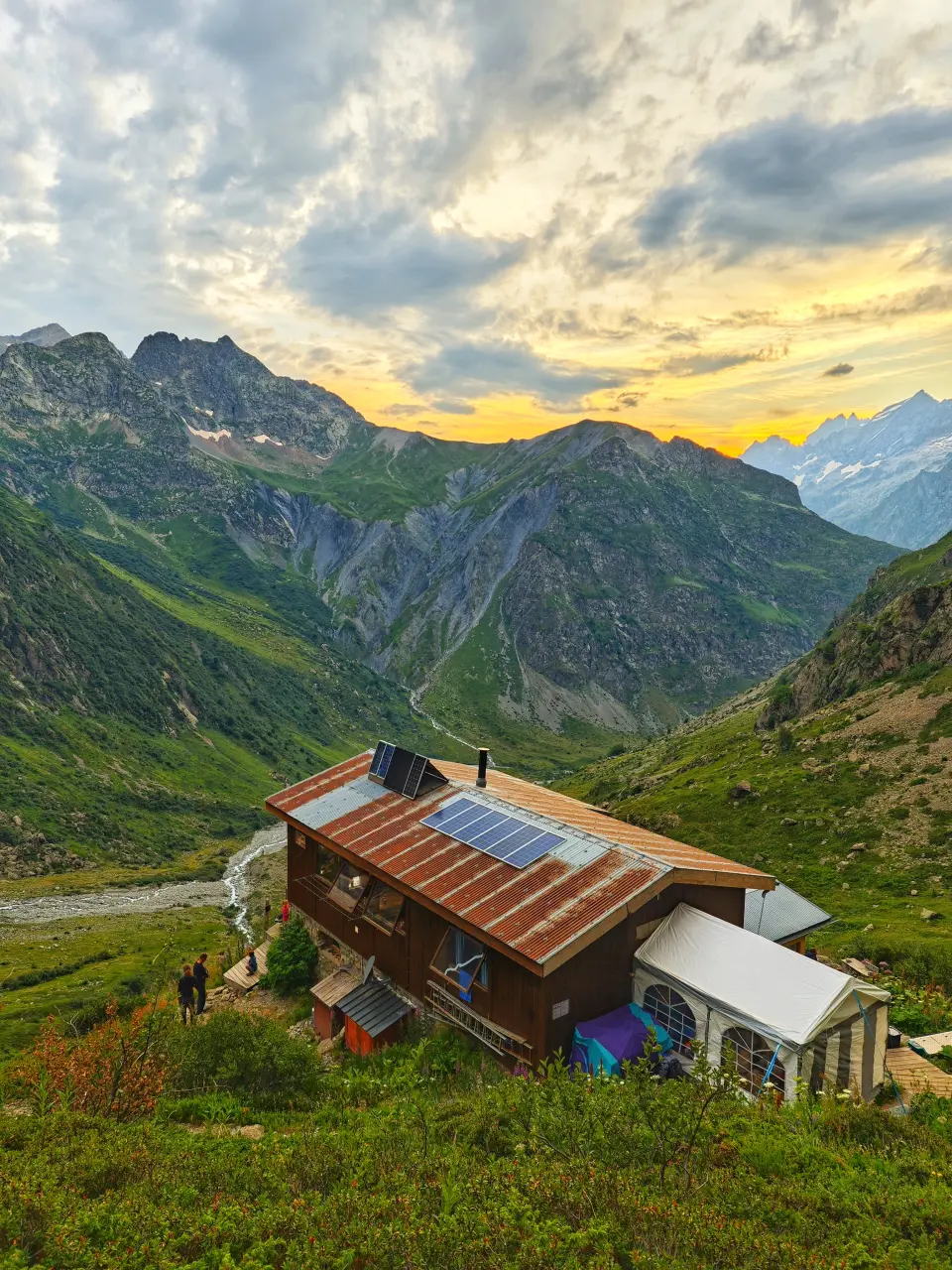 France | Southern Alps
Écrins National Park Traverse
From £529 – 5 daysA 5-day guided trek through the wildest part of the French Alps.
Know more →
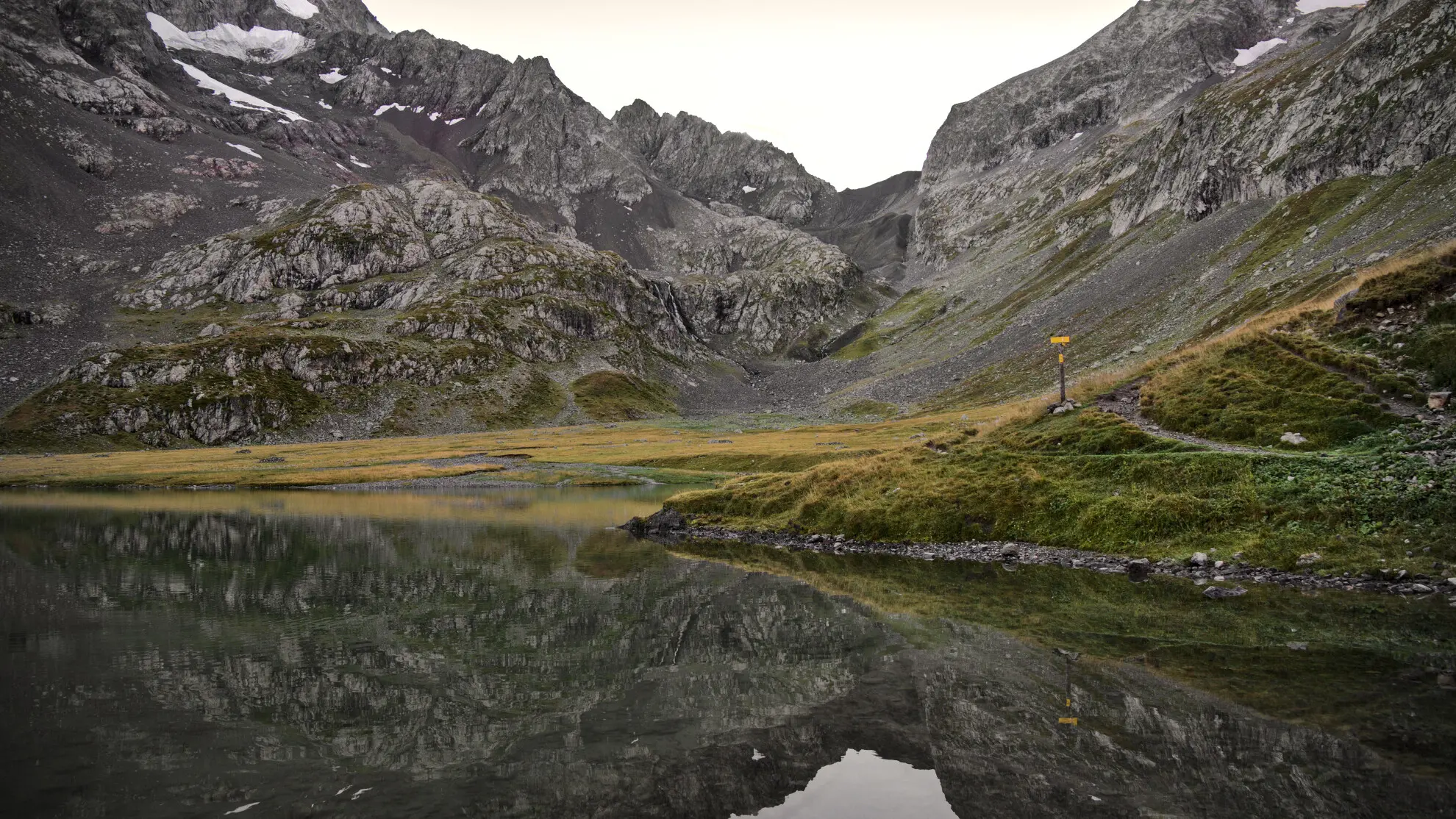 France | Southern Alps
Écrins Tour in 9 Days - Comfort
From £1,766 – 9 daysThe GR54 stripped down to its highest passes, in 8 walking days, with a twin room and a daypack every evening.
Know more →
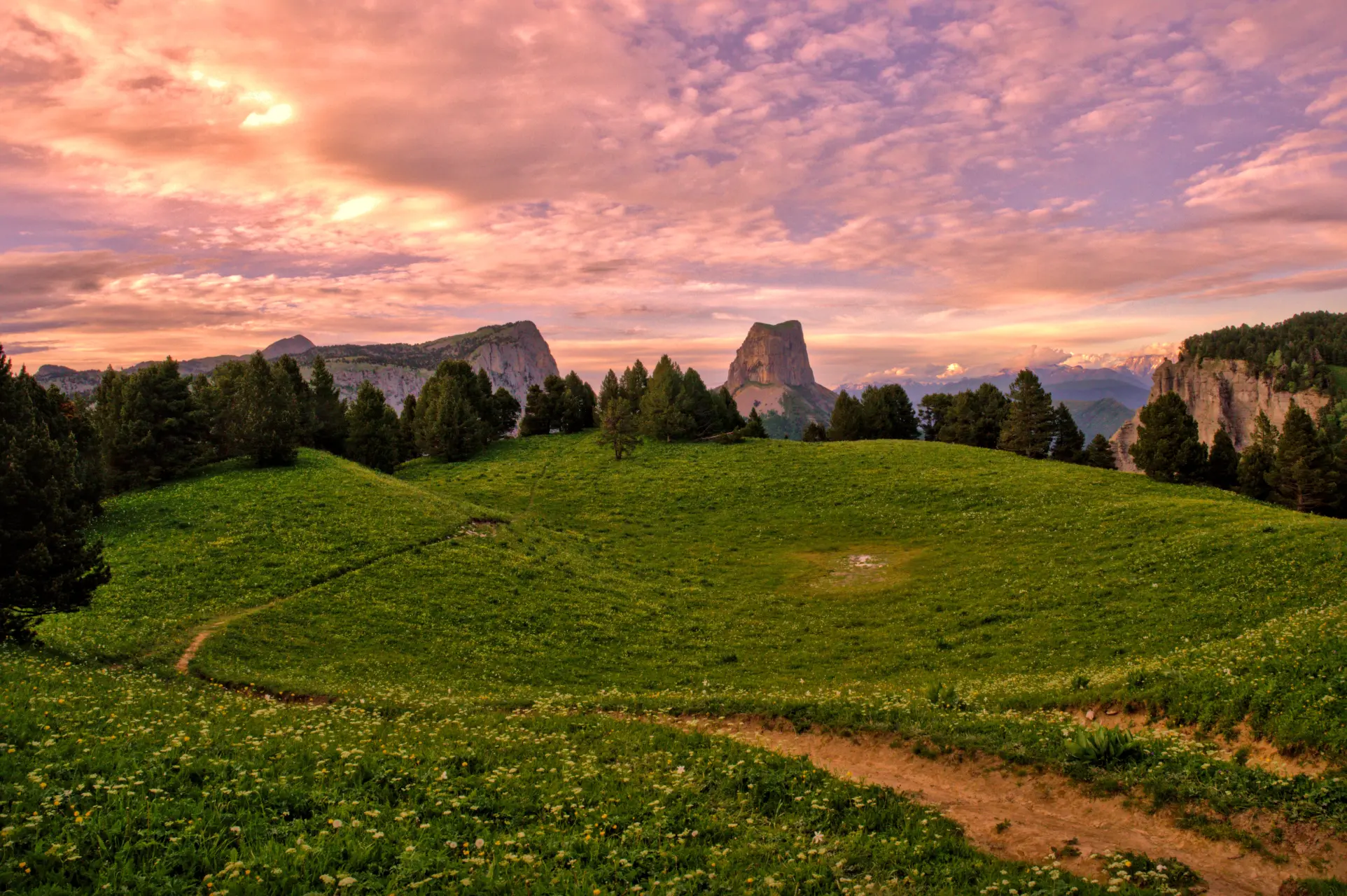 France | Vercors
Vercors Tour - 5 Days
From £536 – 5 daysA 5-day loop through the largest natural reserve in the Alps, accessible by train.
Know more →
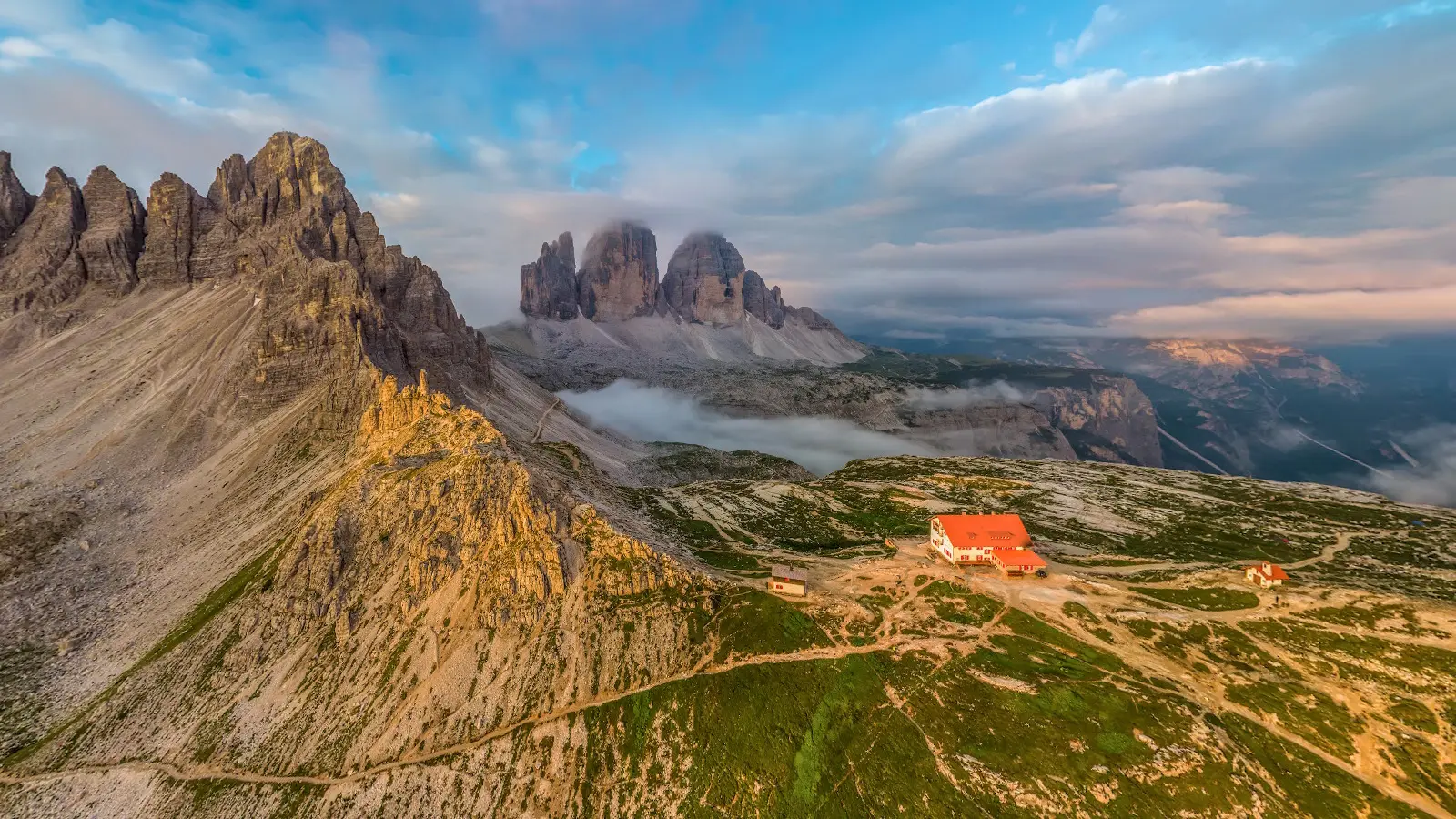 Italy | Dolomites
Dolomites Trek - Bolzano to Tre Cime
From £1,535 – 10 daysA custom itinerary to discover the best of the Dolomites UNESCO World Heritage.
Know more →
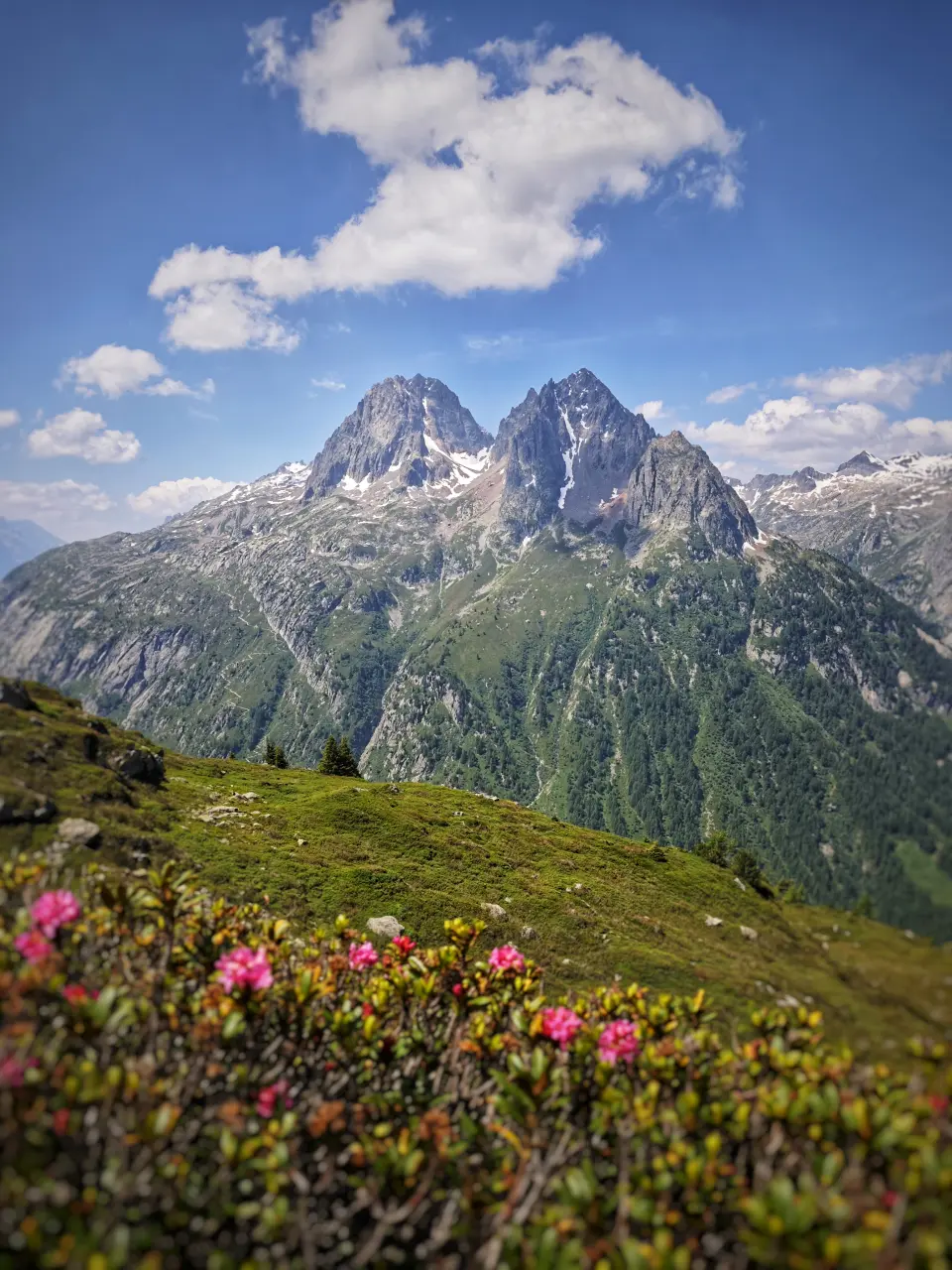 France | Switzerland | Italy
Tour du Mont Blanc in 7 Days
From £1,435 – 7 daysThe iconic trek around Mont Blanc in 7 days through the most scenic trails, from hotel to hotel.
Know more →
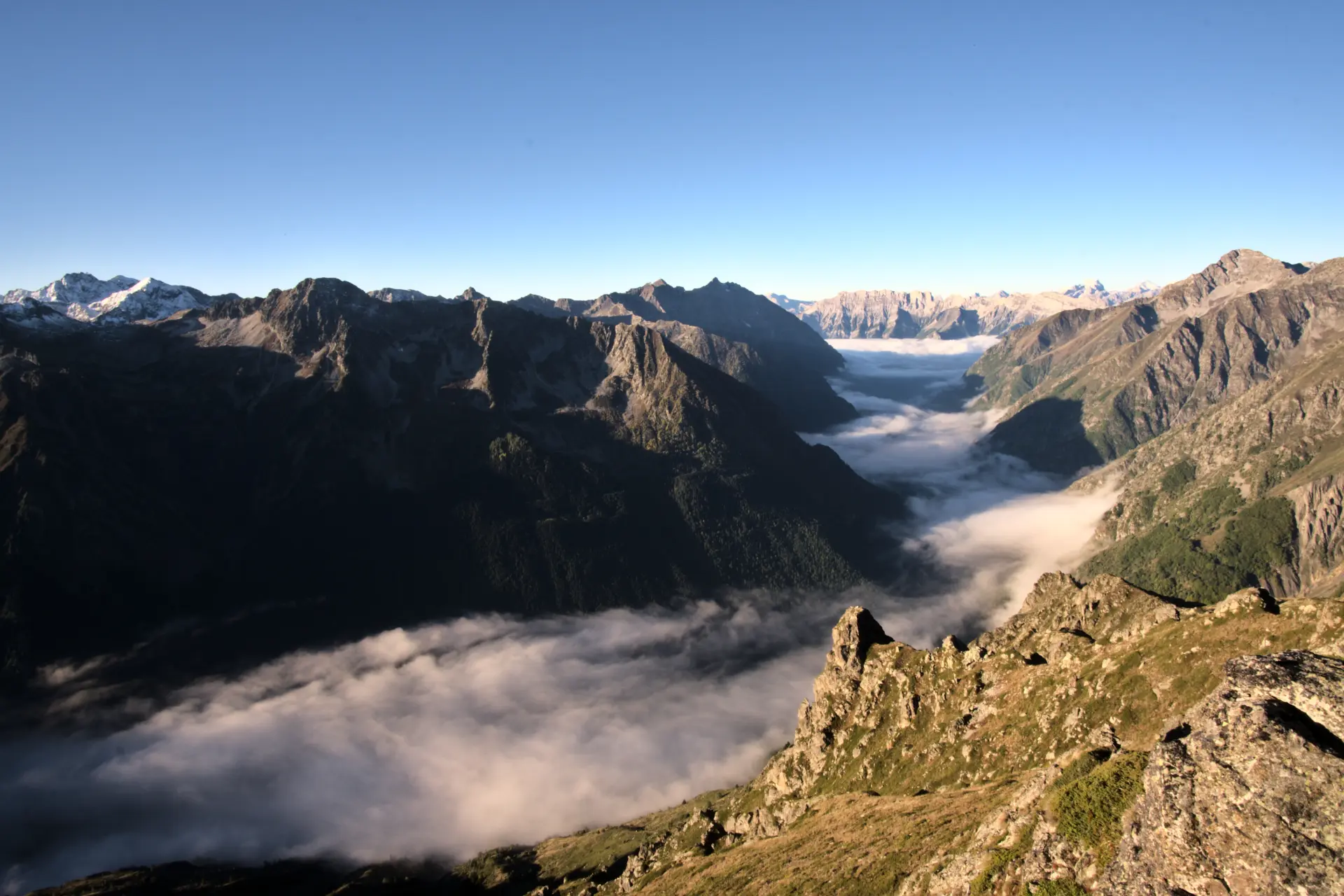 Écrins
Écrins National Park Tour
Hiking Southern AlpsFrom £733 – 6 jours6 days of trekking in one of the wildest part of the Alps.
Know more →


Further reading


- Guided Hikes in the Alps
- Tailor-Made